by Tsague stevy
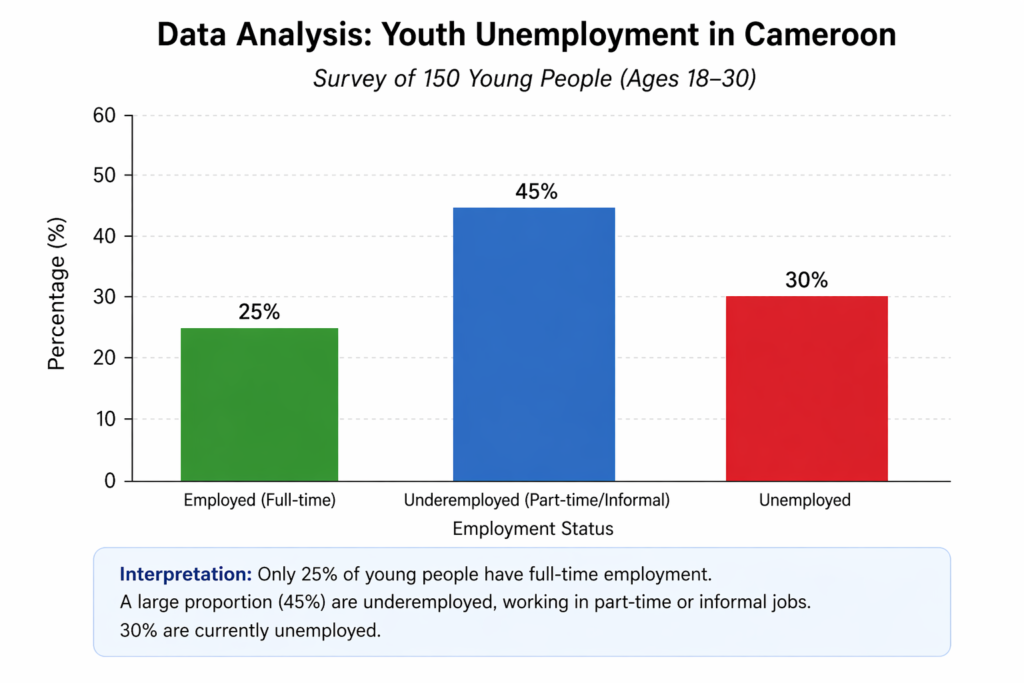
Youth unemployment remains one of the most pressing social challenges in Cameroon today. With thousands of graduates leaving universities each year, the job market struggles to absorb this growing workforce. Many young people, particularly in cities like Yaoundé and Douala, are left either unemployed or underemployed, often working in informal sectors unrelated to their field of study. This situation not only affects their financial independence but also has wider social consequences, including increased poverty, crime rates, and migration in search of better opportunities.Several factors contribute to youth unemployment. First, there is a mismatch between the education system and labor market demands. Many graduates possess theoretical knowledge but lack practical skills required by employers. Secondly, limited industrial growth reduces job creation, while corruption and nepotism in recruitment processes further disadvantage qualified candidates. Additionally, the lack of access to funding makes it difficult for young entrepreneurs to start their own businesses.The government and private sector have introduced initiatives such as vocational training programs and entrepreneurship schemes. However, these efforts often fall short due to poor implementation and limited reach. Addressing youth unemployment requires a more coordinated approach that includes reforming education, promoting skill-based training, and encouraging investment in sectors that can generate employment.